
Interested in maritime history and ocean life? The Caniçal Whale Museum in Madeira opens its doors to a chapter in the archipelago’s history. We were surprised by the modernity of this museum, housed in a small fishing village.
In this article, you’ll find some useful tips to help you prepare for your visit and have a great time!
This opinion is completely independent, based on our experiences. We made our own choices, visited the area anonymously, and paid our bills in full.
Why visit the Caniçal Whale Museum?
Is the Whale Museum worth it? Our opinion:
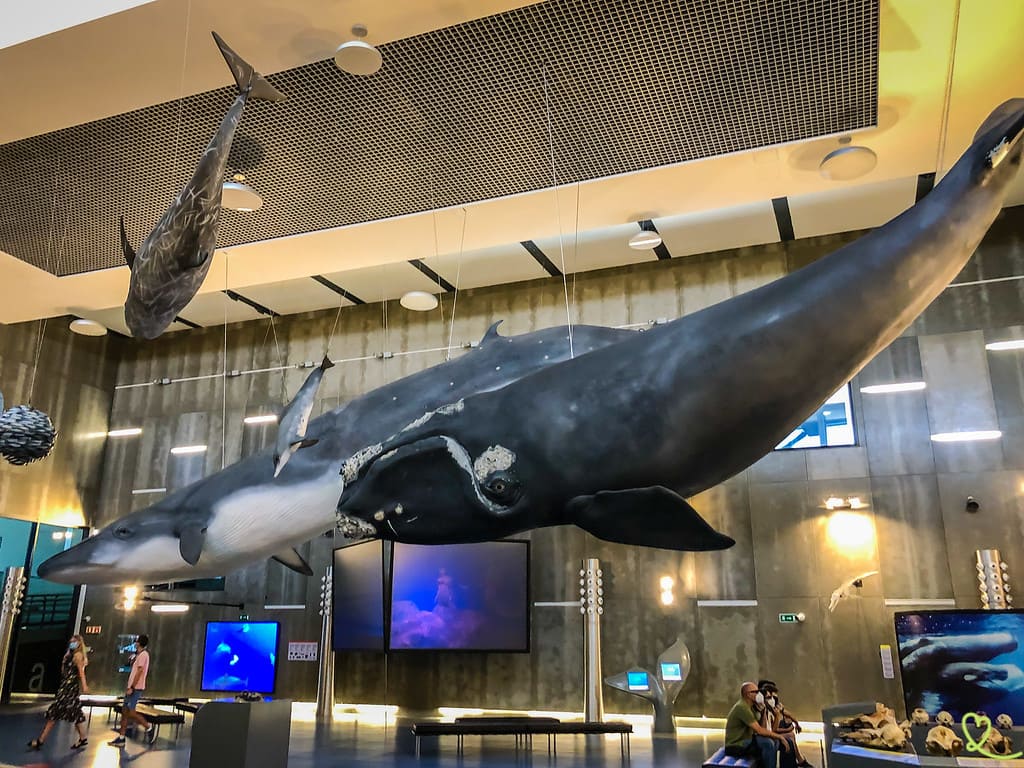
Yes, the Caniçal Whale Museum is well worth a visit to understand the history of the ancient practice of whaling and the current guidelines for cetacean preservation in Madeira. We were impressed by the quality of its permanent exhibits, its ethnographic collection and its modern facilities, including life-size models of whales and dolphins and 3D stereoscopic films. The museum is considered one of the most innovative of its kind in the world.
This is one of the activities to be enjoyed in the village of Caniçal and Madeira.
Why is the Whale Museum famous?
The Caniçal Whale Museum is renowned for its scientific and heritage approach to a subject central to the history of the Madeiran archipelago: whaling. For much of the 20th century, this activity structured the economic and social life of Caniçal, Portugal’s last active whaling port. Today, the museum is one of the few establishments in the world to document this heritage in such detail, combining ethnographic objects, historical archives and contemporary museographic devices.
In addition to its memorial vocation, the institution is also involved in scientific research and conservation projects for Madeira’s marine fauna. Within its walls, you’ll find not only a glimpse into the past, but also a current reflection on the protection of the archipelago’s cetaceans and marine ecosystems. We were touched by this approach.

Our favorite moments
Among the highlights of our visit:
- the life-size models of whales and dolphins were particularly striking for their striking realism. It’s hard to remain indifferent to these reconstructions, which give a very concrete idea of the dimensions of these animals.
- 3D stereoscopic films, which immerse visitors in the marine world with remarkable effectiveness.
- the ethnographic collection, rich in antique utensils and period testimonials, gave us an in-depth understanding of the daily lives of Madeiran whalers.

WHERE TO STAY IN Madeira
Our independent picks for the accommodation of your dreams:

History in brief
Here are the milestones in the history of the Caniçal Whale Museum:
- 20th century: whaling is a major economic activity in Caniçal, Portugal’s last active whaling port.
- 1989: Inauguration of the Whale Museum in the fishing village of Caniçal, in the municipality of Machico.
- September 2011: the museum moves to a new, completely redesigned space, more modern and more accessible.
- Today: the Whale Museum is recognized as one of the most innovative museum spaces of its kind in the world, combining ethnographic heritage, life-size models and stereoscopic 3D films.

Access: Whale Museum, Caniçal
Where is the Whale Museum?
- In the village of Caniçal, in the municipality of Machico, east of Madeira
- Rua Garcia Moniz, nº 1, 9200-031 Caniçal, Madeira, Portugal
- Approximately 29 km east of Funchal
OUR ADVICE FOR RENTING YOUR CAR AT Madeira
- Compare prices on our preferred platform: DiscoverCars – one of the best rated sites.
- Take a car with a good engine for hilly roads, but not too big for manoeuvring.
- There’s plenty of demand and few cars, so book early.

How to get there?
The most convenient way to reach the Whale Museum from Funchal is by car. Depending on traffic, it takes around 25 minutes to cover the 29 km between the capital and Caniçal. Don’t hesitate to rent a car in Madeira for this excursion, especially as the road along the east coast offers some very fine panoramic views.
By bus, route 113 runs from Funchal (Terminal SAM) to Caniçal, departing approximately every hour. The journey takes about 1 hour 05 minutes, and tickets generally cost between €2 and €3. We recommend this option if you want to enjoy the scenery without worrying about parking.

Parking
Parking is available close to the museum in the village of Caniçal. Visit the official website for more info here.


Useful tips: duration, schedules, eating…
Best time to visit
The Whale Museum can be visited in any season, making it an excellent option on rainy days or those less suitable for outdoor activities. Take advantage of your trip to eastern Madeira to combine a visit to the museum with other discoveries in the Machico region. On weekdays, outside school vacations, you can explore the rooms at your own pace.
Length of visit and main difficulties
Allow around 1 hour for a comfortable visit to the Whale Museum, taking the time to read the labels and watch the films. What’s more, the building is fully accessible via ramps, without stairs, making it much easier for all visitors, including PRMs.

Advice on how to visit
The museum is organized around a series of permanent exhibits that follow in a logical sequence. Start with “As Ilhas da Madeira e o Mar” to set the geographical and maritime context, then move on to “A Caça à Baleia” to delve into the history of whaling, and finish with “Os Cetáceos” to discover the biology and diversity of the cetaceans found in Madeiran waters. Why not buy a souvenir?
OUR FAVORITE ACTIVITIES IN Madeira
Catamaran tour to see dolphins and Madeira’s giant cliffs. – View the schedule and availability—and make a reservation!
Canyoning among the rocks! – View options and availability
Gastronomic tour to discover local specialties – View options and availability

Visiting with children
The Whale Museum is family-friendly. Life-size models of whales and dolphins captivate the youngest, and stereoscopic 3D films are often a memorable moment for them. You’ll also appreciate that the building is entirely on one level, with no stairs: strollers and wheelchairs can circulate without constraint. Wheelchairs can be borrowed on site. We think this museum makes an interesting educational outing, although some of the content relating to ancient whaling practices may offend the sensibilities of some. Take this parameter into account.
Schedules and rates
The Whale Museum is open Tuesday to Sunday, 10am to 6pm. Closed on Mondays and certain public holidays. Here are the current rates for permanent exhibitions:
- Adult: €10
- Children under 6: €5
- Young people aged 12-17 / students: €8.50
- Seniors 65 and over: €8.50
- Family ticket: €20
- Groups (8 people or more): from €8 depending on group size
Visit the official website for more info here.

Catering
The museum does not have its own restaurant. For lunch, the village of Caniçal offers a number of small addresses where you can sample the local cuisine. You can also visit Machico.
Madeira and the sea: an age-old relationship
The museum’s first permanent exhibition, entitled “As Ilhas da Madeira e o Mar” (Madeira Islands and the Sea), lays the foundations for the visit by placing the archipelago in its maritime context. We found this introduction particularly well-constructed: it shows how the sea has always been at the heart of Madeira’s identity, far beyond whaling alone. The exhibition explores the historical, economic and cultural links between the inhabitants of the archipelago and the Atlantic Ocean. Take a close look at the documents and objects presented in this section: they reveal little-known aspects of island life and provide essential insights for the rest of the tour. Antique maps, testimonials and maritime artifacts provide a solid entry point into the world of the museum.

Whaling: a heritage steeped in Madeira’s history
This is the heart of the museum: the “A Caça à Baleia” (Whaling) exhibition traces the history of whaling in Madeira throughout the 20th century. Caniçal was Portugal’s last active whaling port, and this fact is reflected in each of the exhibits. We were struck by the ethnographic collection assembled here: ancient utensils, harpoons, traditional boats and hunting equipment sit alongside personal accounts and detailed historical documentation. These archives offer a glimpse into an activity which, for decades, set the pace for the lives of Caniçal families and the economic life of part of the island.

Cetaceans: life-size models and 3D films
The third permanent exhibition, “Os Cetáceos”, is dedicated to the biology and diversity of cetaceans found in Madeira’s waters. This is undoubtedly the most visually impressive section: the life-size models of whales and dolphins are remarkably realistic, and give a real sense of the animals’ proportions. You’ll be amazed at the size of these reconstructions, which add a whole new dimension to our understanding of these species. We were particularly enthralled by the 3D stereoscopic films shown in this section, real immersive plunges into Madeira’s underwater world. The museum is also using the exhibition to promote its scientific research and conservation projects for the archipelago’s marine fauna: an essential contemporary dimension that usefully complements the historical interpretation of the site.

Subscribe to our Newsletter
- Get away from it all with Region Lovers’ beautiful destinations!
- Once a month
- Advertising-free

Frequently asked questions
Is the Caniçal Whale Museum accessible to people with reduced mobility?
Yes, the museum is fully accessible to people with reduced mobility. The building has no staircases, and circulation is via ramps only. Adapted toilets are available on site, and wheelchairs can be borrowed free of charge from reception.
Is whaling still practiced in Madeira?
No, whaling has officially ceased in Madeira. Caniçal was Portugal’s last active whaling port, and this activity is now a thing of the past. Today, the archipelago has taken the opposite approach: protecting cetaceans and conserving marine fauna. The Whale Museum supports this transition by supporting scientific research projects dedicated to safeguarding Madeira’s marine species. The waters around Madeira are also renowned for whale and dolphin watching, an activity that has largely replaced hunting in the local tourist economy.

PLAN YOUR STAY IN Madeira
Best of
Things to do in Madeira
Most beautiful viewpoints
Madeira’s most beautiful beaches
Most beautiful gardens
Natural pools
Most beautiful hikes
Most beautiful roads
Secret places

Practical advice
Getting around Madeira
Rent a car in Madeira
Driving in Madeira
Itineraries: 3 days – 4 days – 5 days – 6 days – 7 days – 10 days